Oil Painting of Dog from Photo: Custom AI vs Hand-Painted Portraits
Looking for an oil painting of dog from photo? We compare hand-painted commissions vs custom AI portraits that preserve your pet's unique identity and charm.
The PawModel Team
May 26, 2026 · 16 min read
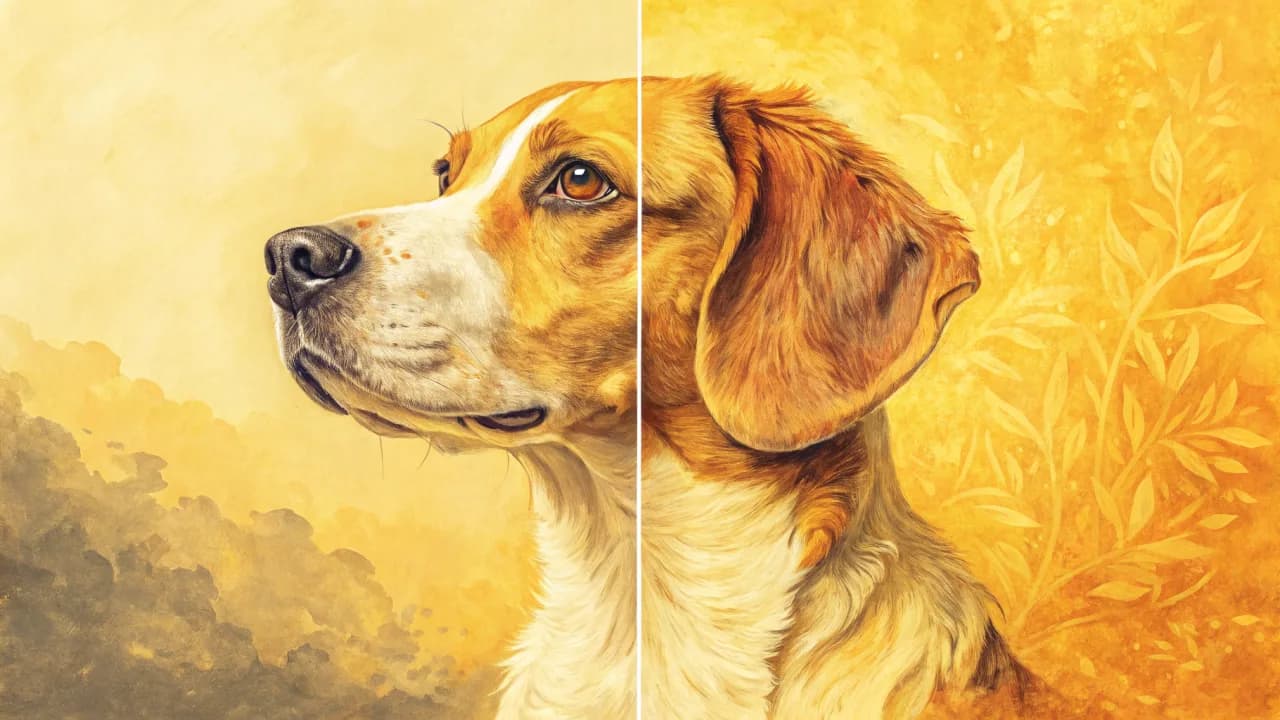
Both hand-painted commissions and custom AI training can produce an oil painting of dog from photo that captures their true personality. That dog is not a generic breed stock image. It is your specific animal, with their exact face shape, fur markings, and expression. The path you choose depends on your timeline, budget, and what kind of art you want to live with.
If you are looking for an oil painting of dog from photo that actually preserves your pet's identity, you have two strong options: a traditional human artist who paints with real oils, or a modern AI platform trained on your pet. Each approach has trade-offs. We built PawModel to solve the problems we found in both worlds, and our complete custom pet portrait guide walks through the full workflow. Here is an honest guide to navigating the options.
Table of Contents
- What Exactly Is an Oil Painting of a Dog from a Photo?
- What an Oil Painting of Your Dog Is, and What It Isn't
- What to Look For in a Quality Dog Portrait
- The Importance of a Good Reference Photo
- Side-by-Side Comparison: Hand-Painted vs AI-Generated
- When to Act: Choosing Your Best Option
- Common Mistakes to Avoid
- How We Approach This at PawModel
- Frequently Asked Questions
What Exactly Is an Oil Painting of a Dog from a Photo?
An oil painting of dog from photo is a custom portrait that starts with your snapshot and reproduces your pet's unique features, fur pattern, and expression using the layered, brush-rich look of traditional oil paint. The key is that it represents your specific animal, not a generic breed stereotype.
Two main routes exist today. The first is commissioning a human artist who uses physical oils on canvas. This route can cost anywhere from one hundred to several thousand dollars and takes weeks. The second is using an AI platform trained on your specific pet's photos. At PawModel, we built this exact solution.
Both routes share the same foundation: a good reference photo. The difference is speed, price, and the nature of the final piece. A hand-painted commission gives you authentic brushstrokes on canvas. A custom AI portrait gives you precise facial detail at a fraction of the cost, with the ability to generate unlimited variations.
The core promise is the same. You want a piece of art that shows your pet as they really are. Not a random dog. Not a breed stereotype. Your dog.
What an Oil Painting of Your Dog Is, and What It Isn't
A true oil painting of your dog from a photo must be a custom creation that preserves the pet's identity. It is not a generic breed stock image. It is not a simple digital filter applied to a snapshot. Many online services sell "digital oil paintings" that are just edge-detection filters. They produce generic eyes, blurry fur, and incorrect markings.
Professional hand-painted commissions take a different approach. Artists like Nicholas Beall ask for reference photos that clearly show the dog's eyes, because eye detail captures personality best. The Studio Wildlife guide breaks down practical decisions for painting a dog, including reference quality, fur texture, and color mixing. Shelley Hanna Fine Art's dog portrait guide demonstrates a workflow that includes sketching, underpainting, fur layering, and finishing touches.
What People Get Wrong About Oil Paintings from Photos
The most common error is treating any app filter as a true portrait. Someone uploads a photo, selects "oil painting effect," and thinks they are done. The result is a filtered photo, not a portrait. It lacks the depth and structure of a real painting.
Another mistake is assuming that hand-painted is the only legitimate method. Custom AI training, like what we offer at PawModel, also learns your dog's specific markings. It produces individualized, breed-accurate results. The AI is trained on ten to twenty photos of your specific dog. It learns what makes your pet recognizable. Every generation afterward preserves that identity.
The third error is failing to provide a good reference photo. If the original snapshot is blurry or poorly lit, the final portrait will suffer regardless of method.
How to Spot a True Custom Portrait
Look for consistency in the details. Does the portrait have the correct eye color? Are the fur markings in the right places? Is the face shape accurate?
For hand-painted commissions, ask for the artist's portfolio. See if their dogs look like specific animals or if they all have the same stylized face. A skilled artist captures individual features.
For AI, ask whether the model was custom-trained on your dog. Generic AI tools like ChatGPT and Midjourney have never seen your pet. They generate a random dog that matches your prompt. A custom-trained model, like the one we use at PawModel, learns your dog's identity.
What to Look For in a Quality Dog Portrait
Identity preservation is the top criterion. Does the final piece look like your dog? Check for accurate markings, correct eye color, and a pose that captures their personality. If the portrait has the wrong face shape or the wrong fur pattern, it fails.
Painting technique matters. Good oil portraits use a specific palette that includes carbon black, titanium white, burnt sienna, burnt umber, and yellow ochre for mixing realistic fur tones. The brushwork should follow the direction of the fur. The eyes should look alive, not flat.
How Does Identity Preservation Work in a Dog Portrait?
Identity preservation means the portrait maintains your dog's unique physical traits. A golden retriever is not just a breed. Your dog has a specific face shape, specific ear placement, specific markings.
For hand-painted portraits, identity comes from the artist's skill. They study your reference photos and paint what they see. The best artists capture not just the physical features but the personality in the eyes.
For custom AI, identity comes from the training process. At PawModel, we use custom-trained adapters that learn your dog's face, markings, proportions, and expressions. Every generation after training preserves your pet's identity. It does not default to a breed stereotype.
Which Painting Technique Creates Realistic Fur?
Realistic fur comes from layering. In traditional oil painting, artists start with the darkest masses and build lighter values gradually to create structure and realism. They follow the direction of the fur with their brushstrokes.
For AI-generated oil paintings, the technique is different but the goal is the same. The model has been trained on a vast range of oil painting examples. It knows how to simulate brushstrokes, layering, and texture. When combined with your dog's trained identity, the result is a portrait that looks painted, not generated.
The Importance of a Good Reference Photo
The old saying applies to both human artists and AI: garbage in, garbage out. The quality of your reference photos directly determines the quality of your final portrait.
A clear photo that shows your dog's eyes is the most important factor. As Pet Portrait Artist notes, eye detail captures personality best in a commission portrait. Choose photos where the eyes are in sharp focus.
For AI, we recommend ten to twenty clear photos. Different angles, good lighting, no motion blur. Show your dog from the front, the side, and at different distances. Include photos that show their full body and close-ups of their face. Our 10-photo upload guide shows exactly which shots to use.
Avoid photos where your dog is a tiny blur in the background. Group photos can work if your dog is clearly visible. The more reference data the artist or AI has, the more accurate the final result.
Why Do You Need Multiple Photos for AI Training?
Multiple photos give the AI a complete understanding of your dog. One photo might show your dog from one angle. Ten photos show your dog from every angle.
This matters because AI models learn by comparing differences. If your dog has a white spot on their chest, the AI needs to see that spot from multiple angles to understand where it belongs. If your dog has floppy ears, the AI needs to see them from the side and the front.
At PawModel, our training process takes about ten minutes once you upload your photos. The system analyzes every image and learns your dog's unique features. After training, you can generate unlimited portraits that preserve your pet's identity.
What Makes a Bad Reference Photo?
Blurry photos are the worst. If the photo is out of focus, the AI or artist has to guess at the details. They will guess wrong.
Photos where your dog is too small are also a problem. If your dog takes up less than a quarter of the frame, there is not enough detail to work with.
Photos with extreme lighting are tricky. A photo where your dog's face is half in shadow will confuse the AI. A photo that is overexposed will wash out the fur color.
Photos where your dog is wearing accessories can cause issues. A collar or bandana might hide part of the neck or chest. For best results, choose photos where your dog is fully visible.
Side-by-Side Comparison: Hand-Painted vs AI-Generated
Choosing between a hand-painted commission and a custom AI portrait depends on your priorities. Here is a direct comparison of the key factors.
| Feature | Hand-Painted Commission | Custom AI Portrait (PawModel) |
|---|---|---|
| Price | $150 to over $1000 | $4.99 to $59.99 packs, or $14.99/mo |
| Turnaround | 2 to 8 weeks | 10 minutes training, then instant output |
| Resemblance | High (depends on artist skill) | Very high (photo-trained) |
| Medium | Real oil paint on canvas | PNG, MP4 digital files |
| Revisions | Limited and costly | Unlimited retries |
| Styles | Artist's signature style | 20+ styles (oil, watercolor, anime, etc.) |
| Best for | Heirloom, authentic wall art | Fast, affordable, multi-style portraits |
Many pet parents value the authenticity of a hand-painted portrait. If you want a one-of-a-kind heirloom piece that you can hang on your wall, a human artist is the right choice.
But if you want speed, affordability, and the ability to create multiple styles from the same training, custom AI is a strong alternative. With PawModel, you train once and have access to every style preset in our library.
PawModel vs Generic AI Tools
Generic AI tools like ChatGPT and Midjourney seem like a quick option. You type a prompt and get an image. But those tools have never seen your dog. They generate a breed stereotype.
| Feature | PawModel (Custom Trained) | ChatGPT / Midjourney |
|---|---|---|
| Knows your dog | Yes | No |
| Output consistency | High | Low |
| Prompt needed | No (uses recipes) | Yes |
| Animated reels | Yes | No |
| Identity lock | Yes (custom training) | No |
| Cost per portrait | About $0.20 to $0.35 | Cheaper, but generic |
The difference is clear. Generic tools give you a random dog. PawModel gives you yours. We built this product because we were frustrated with the exact same problem. We wanted art of our own dogs, not a stock photo.
When to Act: Choosing Your Best Option
The right choice depends on your specific situation. Here is a simple guide.
Choose a hand-painted commission if you want an heirloom piece that will last for decades. You appreciate the craft of traditional oil painting. You are willing to wait weeks and pay hundreds of dollars. The physical texture of real oil paint on canvas matters to you.
Choose a custom AI platform like PawModel if you want fast, affordable portraits that look exactly like your pet. You want to explore multiple styles without commissioning separate pieces. You want the ability to generate unlimited variations. You want animated reels in addition to static portraits.
Timing matters. If you have an aging pet, do not wait. Capture their likeness now. Our training process takes ten minutes. After that, you can generate portraits immediately.
If you are looking for a gift, consider the recipient. A hand-painted portrait is a meaningful heirloom. A set of AI portraits across multiple styles gives them variety and options. For more inspiration, see our pet portrait gift ideas.
Common Mistakes to Avoid
Relying on a Single Blurry Photo
One blurry photo is not enough for a good portrait. The artist or AI needs clear details to work with. If the photo is blurry, the final portrait will be blurry.
Always provide multiple clear photos. For AI, we recommend ten to twenty. For a human artist, ask them how many they prefer.
Expecting a Cheap Filter to Deliver a Custom Portrait
There are many apps that apply an "oil painting effect" to photos. These apps do not create custom portraits. They apply a filter that makes your photo look vaguely like a painting.
The result is not a true portrait. It lacks depth, structure, and identity. You get a filtered photo, not a painting. True custom portraits require either a skilled human artist or a custom-trained AI model. Neither comes from a five-dollar filter app.
Skipping the Artist's Portfolio
If you choose a hand-painted commission, check the artist's portfolio. Do their dogs look like specific animals, or do they all have the same stylized face?
A skilled artist captures individual features. Look for consistent quality across different breeds. Look for accurate eye detail and fur markings.
Forgetting the Background
A portrait is more than just the subject. The background matters. A solid color background is fine, but a thoughtfully composed background elevates the piece.
At PawModel, our recipes include background styles. You can choose a simple studio background or a scenic outdoor view. The choice depends on your taste and where you will display the portrait.
Ignoring AI Terms of Service
If you use a generic AI tool, check the terms of service. Some tools claim ownership of the generated art. Others allow commercial use but with restrictions.
At PawModel, you own your generations. We do not claim ownership of your pet's portraits. You can print them, share them, and use them however you like.
How We Approach This at PawModel
We built PawModel because we were frustrated with generic AI art. We typed "oil painting of a golden retriever in a flower field" into our favorite AI image tool. The result was beautiful. And it was unmistakably someone else's dog. Wrong face shape. Wrong markings. Same generic golden retriever you would see on a stock-photo site.
That is not a failure of imagination. It is a failure of identity. The model has never seen your specific dog, so it has no idea what makes them different from any other breed.
How Does Custom Training Preserve Your Dog's Identity?
Our solution is a custom-trained adapter. You upload ten to twenty photos. Our AI learns your dog's face, markings, proportions, and expressions. Every generation afterward preserves your pet's identity.
The training process takes about ten minutes. Once trained, you have access to every style preset in our library. No prompt engineering required. No guessing. You choose a recipe, and the AI generates a portrait that looks like your dog.
We support multi-pet training per run. If you have two dogs, you can train them together. Every portrait can include both pets with their individual features preserved.
Which Styles Can You Get with an Oil Painting Recipe?
We offer twenty-plus ready-to-go recipes. The oil painting recipe produces a classic portrait with rich brushstrokes and warm tones. Other recipes include watercolor, anime, superhero, birthday cards, sports cards, and more.
All style presets are included on every plan. You train once and have access to everything. No paywalls for specific styles.
We also offer animated reels. These are five-second AI video clips of your pet. Options include "Animate This", "Make Them Talk", and "Bring Them to Life". These are perfect for sharing on social media or sending to family.
Our pricing is transparent. The Free Trial gives you four credits to start. The Train Your Pet Welcome Offer gives you twenty-five credits. The Starter Credit Pack gives you forty-five credits. The Popular Credit Pack gives you one hundred credits and includes one animated reel. The Creator Credit Pack gives you two hundred twenty credits and includes five animated reels. PawModel Monthly gives you sixty credits per month with rollover up to one hundred eighty.
We are an independent indie product built for pet owners by pet owners. If you have questions, reach us at support@pawmodel.com. We are here to help you create art that actually looks like your pet.
Frequently Asked Questions
Can you really get an oil painting of a dog from just a photo?
Yes. Both a human artist and a custom-trained AI start from your reference photos. A skilled painter studies the photos and renders them in oils over several weeks. A custom AI platform like PawModel trains on ten to twenty of your photos in about ten minutes, then generates an oil painting style portrait that preserves your dog's face, markings, and proportions.
How many photos do I need for an accurate dog portrait?
Plan on ten to twenty clear photos from different angles and in good light. Include close-ups of the face and a few full-body shots. More angles help both an artist and an AI model understand where your dog's markings actually sit.
Is an AI oil painting cheaper than a hand-painted commission?
Almost always. Hand-painted commissions typically run from about $150 to over $1,000 and take weeks. With PawModel, credit packs range from $4.99 to $59.99, or $14.99 a month, and a single-image portrait costs roughly $0.20 to $0.35 once your pet is trained.
Will the portrait actually look like my dog and not a generic breed?
That is the whole point of identity preservation. A generic prompt in a tool like ChatGPT or Midjourney has never seen your dog, so it paints a breed stereotype. A custom-trained model learns your specific dog and keeps that likeness across every style.
Can I download and print my dog's oil portrait?
Yes. PawModel delivers your portraits as PNG files you can print or share, and animated reels as MP4 video. You own your generations and can use them however you like.
More from the journal.
AI pet birthday cards: how to make one that actually looks like your dog
Generic card makers paste a stock dog onto a template. Here's how custom-trained AI puts YOUR pet on the card, in any style, in under five minutes.
Pet Portrait Gift Ideas: How to Choose a Present That Captures Their Pet's True Personality
Pet portrait gift ideas that truly capture a loved one's pet. Compare hand-painted and AI options, styles, formats, and tips for picking the perfect gift.
Custom Pet Portrait From Photo: The Complete Guide to Getting Art That Actually Looks Like Your Pet
Want a custom pet portrait from photo that preserves your pet's unique face and markings? We compare AI, hand-painted, and DIY options. See what works.